Does West Virginia Require a Notary Journal? No — Optional Under RULONA (2026)
No. West Virginia was one of the first states to adopt the Revised Uniform Law on Notarial Acts, back in 2014, and it took the optional-journal form: a notary may keep a journal, and nothing requires it for traditional, in-person notarizations. The Secretary of State's handbook is direct about the choice anyway: keeping a record book "is strongly advised" because it documents the notary's personal knowledge of each notarization.
Last updated: August 2026.
What West Virginia law covers
West Virginia's notarial acts law (West Virginia Code chapter 39, article 4) governs commissions, conduct, and notarial acts, with the Secretary of State administering the program. For in-person paper acts, the journal stays the notary's choice; remote notarization provisions carry their own record duties for those acts.
The case for keeping one anyway
A journal answers the question that arrives years after a signing: did this person appear before you, and how did you know who they were? An entry with the date, the document, the ID checked, and the signer's own signature answers it with evidence rather than memory. The journal is your own record; West Virginia sets no rules for who may see a voluntary paper record, and in a dispute it can be subpoenaed like any business record.
What format works in West Virginia
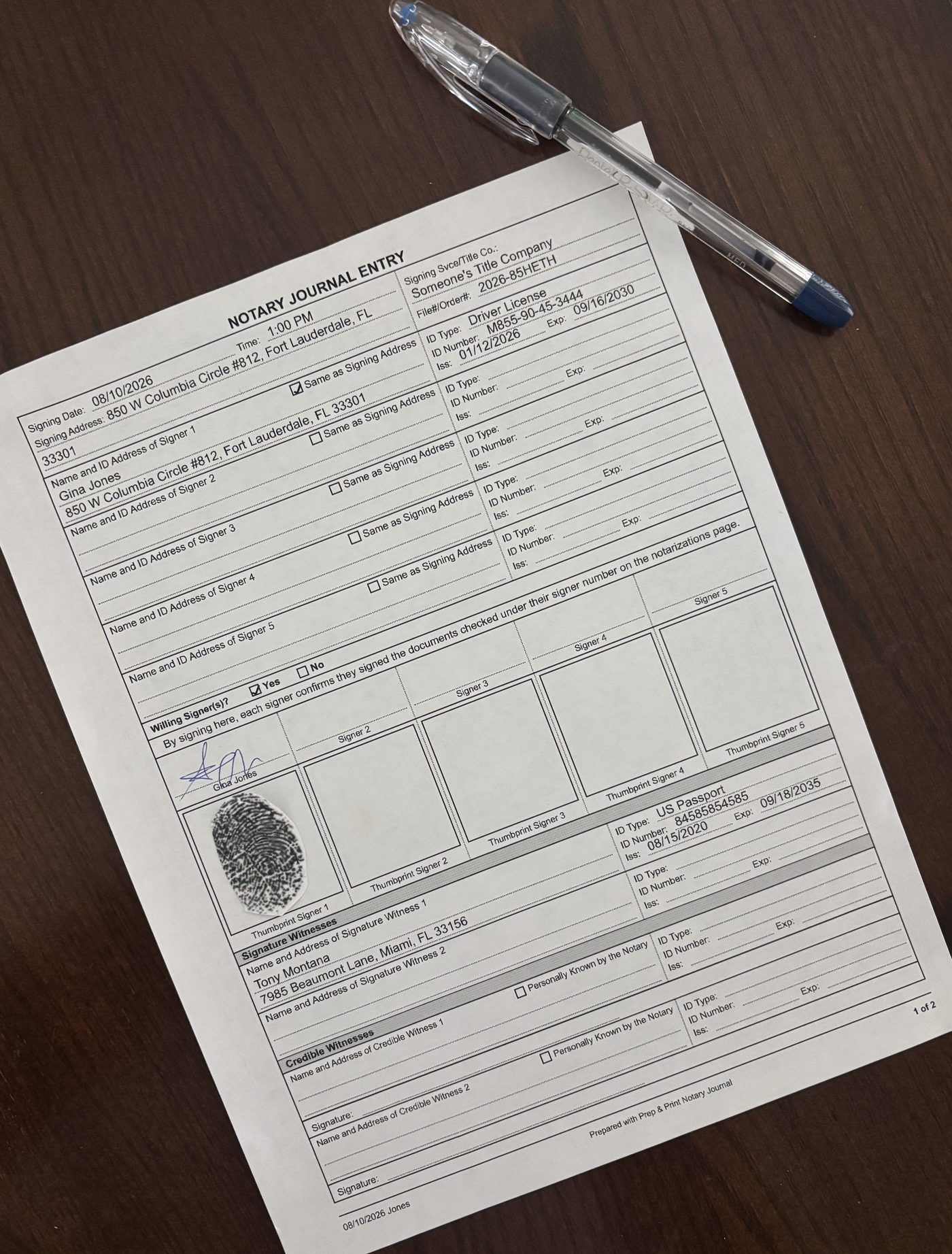
Any consistent format: a bound book, printed pages kept in order, or an electronic record. A voluntarily kept electronic journal follows the state's electronic journal rules: username-and-password access, no deleting or altering entries once stored. The handbook's suggested entry format runs: the date of the act, the type of act, the type of document, the name and address of each person whose signature was notarized, the signature of each of those persons, a notes section, and an itemized list of any fees. Audiovisual recordings of remote notarial acts are kept at least five years.
Questions West Virginia notaries ask
Do West Virginia signing agents need a journal for loan signings? Not by statute. Real estate documents are also the ones most likely to be questioned later, which makes loan signings the acts most worth recording.
Does remote notarization change anything? Remote acts have their own record rules under West Virginia's remote notarization provisions. For in-person work, keeping a record remains your choice.
Should signers sign my West Virginia journal? Nothing requires it. A signature in your record is direct evidence the person appeared before you.
The record without the handwriting
Prep & Print Notary Journal fills in the entry on screen before the signing, prints it for ink signatures at the table, and keeps the saved entry in your browser on your own computer. It costs $19 once, at prepandprintnotary.com.
Every state's rule is on one page: Notary Journal Requirements by State.
Sources: W. Va. Code ch. 39, art. 4 (notarial acts); WV Secretary of State Notary Handbook. General information, not legal advice.