Tennessee Notary Journal Requirements — The Well-Bound Book Rule Explained (2026)
Yes, if you charge fees. Tennessee ties the record-keeping duty to charging for notarial work, and the statute answers the format question itself: the record is kept "either in an appropriate electronic form or in a well-bound book" (Tenn. Code Ann. § 8-21-1201).
Last updated: August 2026.
What Tennessee actually requires
Section 8-21-1201 draws the lines. If the notary or the notary's employer demands and receives a fee, the notary keeps a record of each act, attestation, protestation, and other instrument of publication, in an appropriate electronic form or a well-bound book. If no fee is demanded or received, no recordation is required. And if fees are charged for services generally with no separate fee for the notary work, no recordation is required either.
The format question also has an answered history. In Tenn. Att'y Gen. Op. No. 14-89 (2014), the Attorney General concluded a notary's record may be kept in an electronic medium meeting the standards of § 10-7-121: available for public inspection, retained as required, backed up, and printable when a member of the public asks. The opinion treats the record of a notary's official acts as a public record. Today's statute states the electronic option directly.
The practical read: charge fees, keep records, in a bound book or a compliant electronic form.
What each Tennessee record should capture
The date of each act, the type of act and document, the signer's name, how the signer was identified, and the fee charged. The record also answers any later question about what you charged, which is the very thing the statute ties the duty to.
What format should a Tennessee notary use?
A well-bound book always qualifies, and the statute equally allows "an appropriate electronic form." The Attorney General's reading of the electronic option runs through § 10-7-121's standards: public inspection, proper retention, backups, and a paper copy on request. Loose printed pages are neither a well-bound book nor an electronic record, so a notary charging fees keeps one of the two formats the statute names. Whichever you choose, keep every act in it, in order.
Questions Tennessee notaries ask
I never charge for notarizations. Do I need a record? No. The duty attaches when the notary or the notary's employer demands and receives a fee, and the statute adds that a general service fee with no separate notary fee does not trigger it either. Keeping a record anyway protects you the same way it does anywhere: it shows what happened at the table if an act is ever questioned.
Does Tennessee require signers to sign the record? No such requirement appears in the statute. A signature in your record strengthens it as evidence.
Does the well-bound book need numbered pages? The statute does not spell out numbering. Orderly, chronological, and permanent is the standard to aim for in whatever format you keep.
The honest note from us
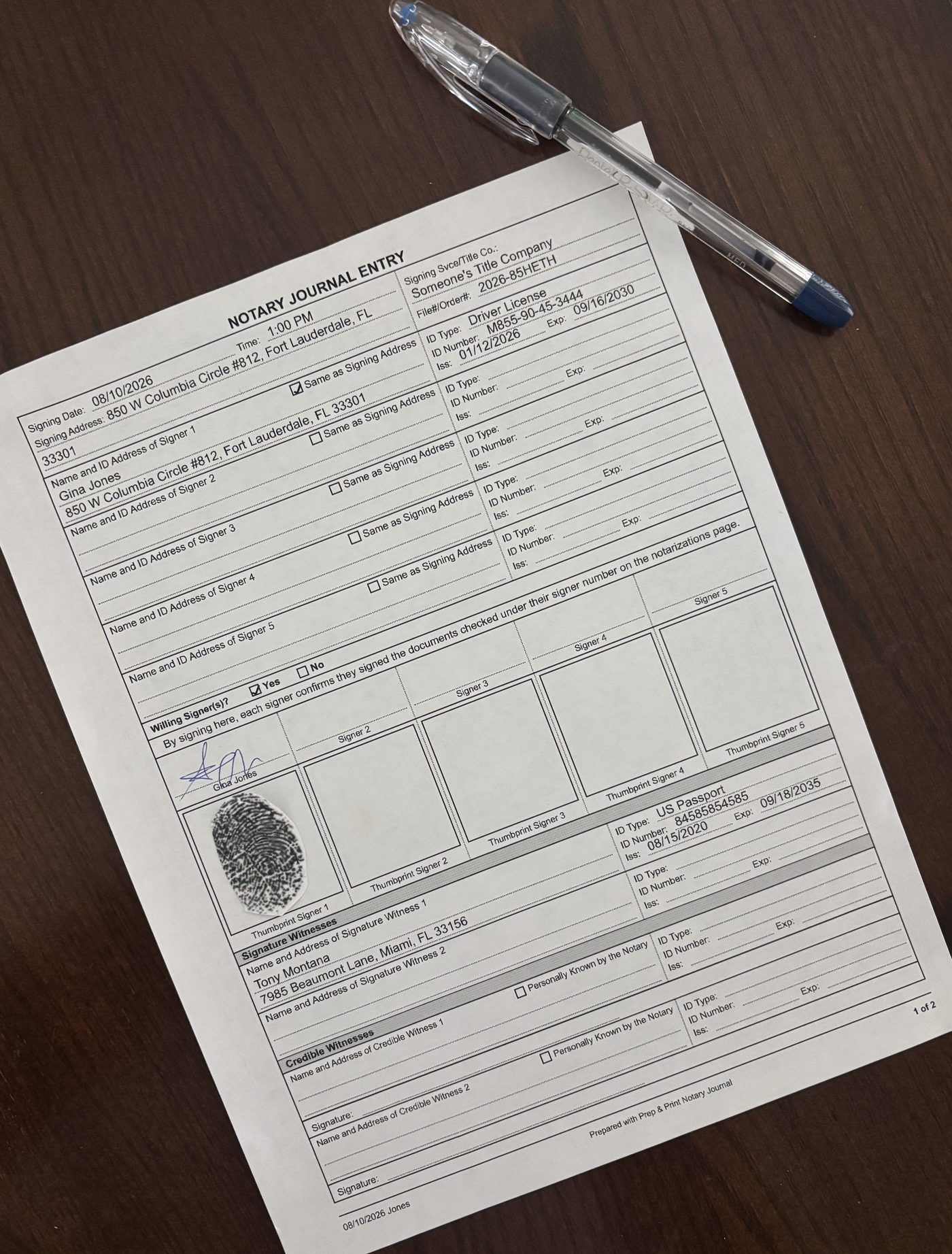
Prep & Print Notary Journal sells a $19 app that prints filled-in journal pages, and Tennessee's statute names two formats for the fee-charging notary's record: a well-bound book or an appropriate electronic form. Loose printed pages are neither. If you never charge a separate notary fee, no record is required and any format you keep is your own choice. The app is at prepandprintnotary.com. Tennessee notaries who charge fees: keep the bound book or a compliant electronic record.
Update, September 2026: we make a bound edition now. The Prep & Print bound journal is on Amazon — permanently bound, one signing per two-page spread, preprinted page and entry numbers, signature and thumbprint boxes, in five cover colors.
Every state's rule is on one page: Notary Journal Requirements by State.
Sources: Tenn. Code Ann. § 8-21-1201 (when recordation is required, and format); Tenn. Att'y Gen. Op. No. 14-89 (Sept. 29, 2014); Tenn. Code Ann. § 10-7-121; Tennessee Secretary of State FAQ on the well-bound book. General information, not legal advice.