Louisiana Notary Record Requirements — Record Books for Property Acts (2026)
Louisiana is its own world. As the one civil-law state, its notaries hold broader powers than notaries elsewhere, and its record-keeping rule is tied to the work rather than to a general journal: acts affecting immovable property must be recorded in record books kept for that purpose. For ordinary notarizations outside that duty, Louisiana sets no journal requirement.
The statute: Louisiana Revised Statutes 35:199 requires notaries to record
"all acts of sale, exchange, donation, and mortgage of immovable
property passed before them, together with all resolutions, powers of
attorney, and other documents annexed to or made part of the acts, in
their proper order,"
after "first making a careful record of the acts in record books to be kept for that purpose." The same section adds a parish quirk: in Orleans Parish, an act evidencing a transfer of immovable property must be registered with the recorder within forty-eight hours of passage.
Last updated: August 2026.
What this means in practice
- Acts of sale, exchange, donation, and mortgage of immovable property: recorded in your record books, in proper order, with the annexed documents
- Property outside Orleans Parish: the instrument is recorded with the recorder of the parish where the property sits within fifteen days under the same recordation law
- Orleans Parish runs its own stricter system: transfers registered within 48 hours, acts filed through the custodian of notarial records, and record keeping treated as a requirement for the parish's notaries
- Remote online notarization carries its own record duties: the notary maintains printable electronic copies of all remote online notarial acts and an audio-video recording of each one, both for at least ten years, secured against loss and tampering; a qualifying custodian may hold them if the notary keeps unrestricted access (R.S. 35:629)
- Everything else (acknowledgments, affidavits, general notarial work): no journal statute applies, and keeping a record remains the standard protection it is everywhere. The record is your own; in a dispute it can be subpoenaed like any business record
Questions Louisiana notaries ask
Does Louisiana require a journal for everyday notarizations? No statute requires one for work outside the immovable-property duty. The record-book duty in R.S. 35:199 attaches to the property acts it lists.
What counts as a record book for R.S. 35:199? The statute says record books kept for that purpose, holding the acts in proper order. A bound book kept in order is the traditional answer, and the Secretary of State's notary division publishes the official reference on notarial practice, Fundamentals of Louisiana Notarial Law and Practice.
I'm a notary in another state reading this. Why is Louisiana different? Louisiana's legal system descends from French civil law. Its commissioned notaries draft and pass authentic acts, closer to the notarial role in Europe than to the notary public role in the other 49 states.
Where the app fits in Louisiana
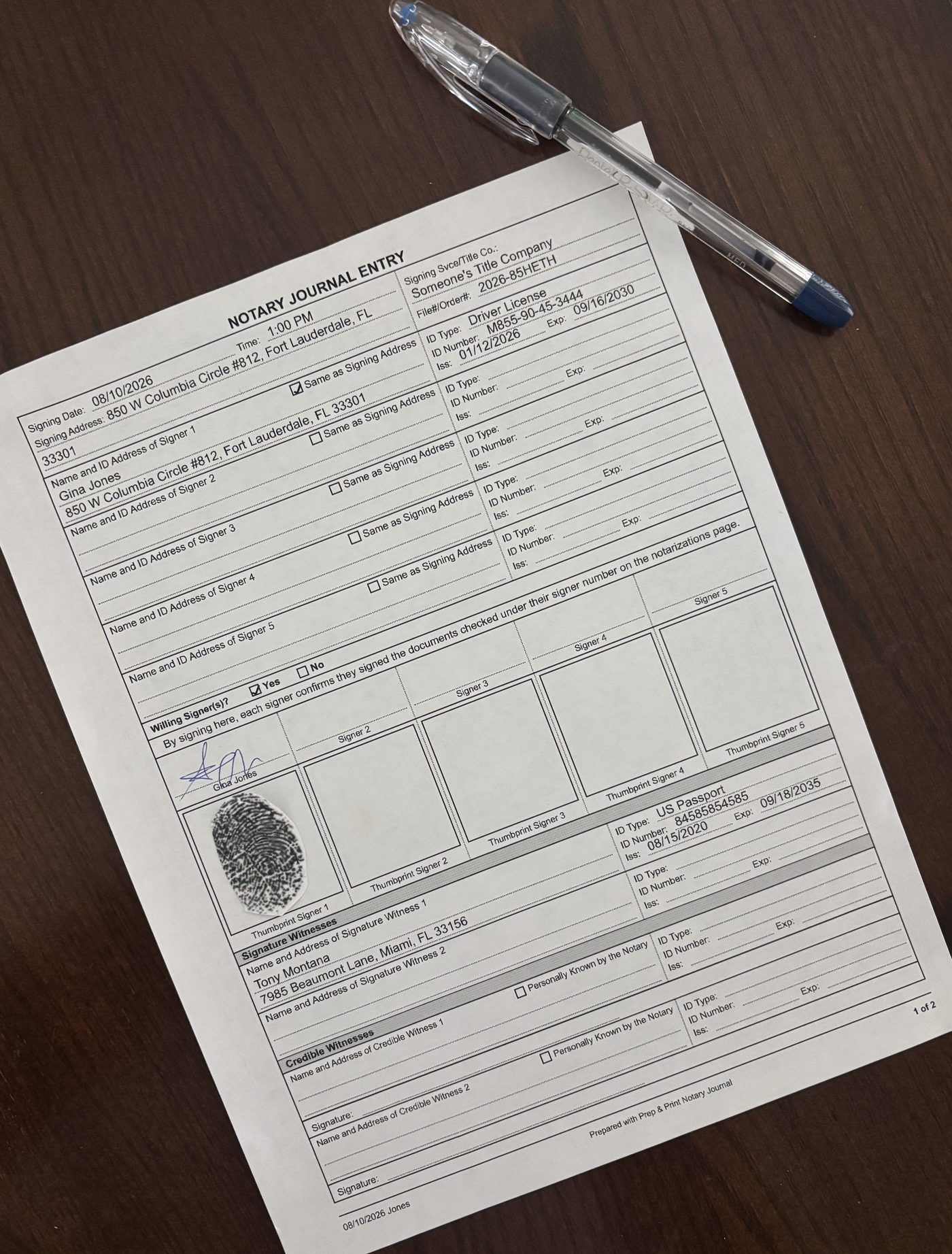
Prep & Print Notary Journal fills in a journal page on screen, prints it for ink signatures, and keeps the saved entry in your browser on your own computer. For the everyday notarial work Louisiana leaves unregulated, it works the way it does in any no-requirement state. For acts under R.S. 35:199, keep the record books the statute names. The app is $19 once, at prepandprintnotary.com.
Every state's rule is on one page: Notary Journal Requirements by State.
Sources: La. R.S. 35:199; La. R.S. 35:629 (remote online notarization records); Louisiana Secretary of State, Notary & Certifications. General information, not legal advice.