Does Kentucky Require a Notary Journal? No — Optional Under KRS 423 (2026)
No. Kentucky's notary law, rewritten in 2020, does not require a journal for traditional, in-person notarizations. The choice belongs to the notary, and remote online notarizations carry their own record duties for those acts.
Last updated: August 2026.
What Kentucky law covers
Kentucky's notarial acts law (KRS chapter 423) governs commissions, conduct, and both in-person and online notarizations. For in-person paper work it sets duties around identification, presence, and certificates without requiring a record of acts. Kentucky is another state that adopted the modern uniform framework in its optional-journal form, unlike Washington or Pennsylvania where the same framework arrived with a mandatory journal.
The case for keeping one anyway
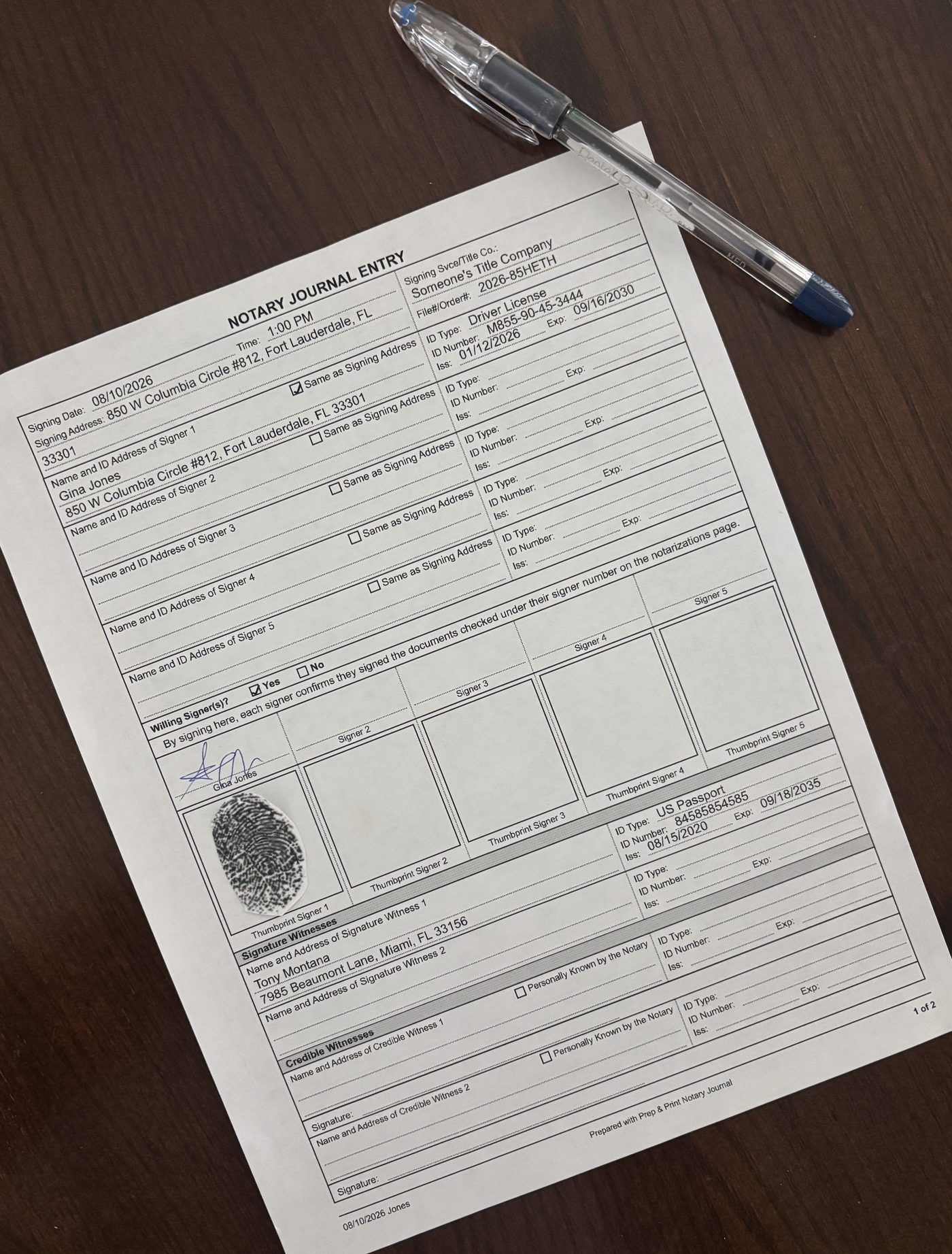
A journal answers the question that arrives years later: did this person appear before you, and how did you know who they were? An entry with the date, the document, the ID checked, and the signer's own signature answers it with evidence. The journal is your own record; Kentucky sets no rules for who may see a voluntary record, and in a dispute it can be subpoenaed like any business record.
What format works in Kentucky
Any consistent format: a bound book, printed pages kept in order, or an electronic record. Capture each act with the date, time, document, signer, identification, and fee, in the order the acts happen.
Questions Kentucky notaries ask
Do Kentucky signing agents need a journal for loan signings? Not by statute. Real estate documents are also the ones most likely to be questioned later, which makes loan signings the acts most worth recording.
Does online notarization change anything? Yes. A notary registered to perform notarial acts on electronic records must keep one or more journals in a permanent, tamper-evident electronic format, retained at least ten years after the last act in them. One rule inside that regime is worth knowing: "A journal entry shall not record identification numbers assigned to an individual by a governmental agency or any biometric identifier" (30 KAR 8:005, Section 6). For in-person work, keeping a record remains your choice.
Should signers sign my Kentucky journal? Nothing requires it. A signature in your record is direct evidence the person appeared before you.
The record without the handwriting
Prep & Print Notary Journal fills in the entry on screen before the signing, prints it for ink signatures at the table, and keeps the saved entry in your browser on your own computer. It costs $19 once, at prepandprintnotary.com.
Every state's rule is on one page: Notary Journal Requirements by State.
Sources: KRS ch. 423 (notarial acts); 30 KAR 8:005 (electronic journal). General information, not legal advice.