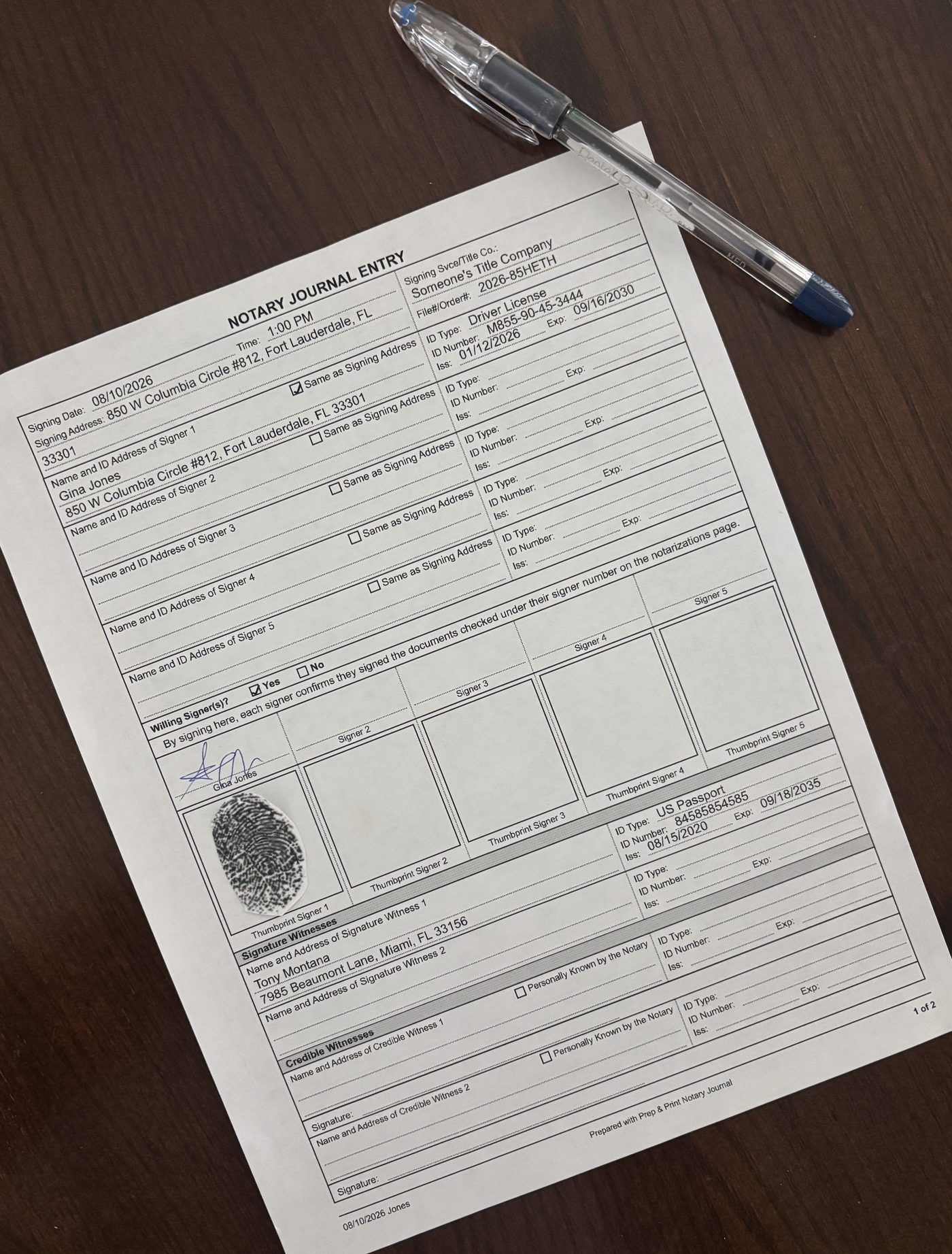
Hawaii Notary Journal Requirements — A Record of Every Official Act (2026)
Yes. Hawaii requires notaries to keep a record of their official acts. Hawaii's notary law (Hawaii Revised Statutes chapter 456) is administered by the Attorney General's office, which commissions notaries and publishes the working guidance, including the notary public manual.
Last updated: August 2026.
What Hawaii expects
Section 456-15 requires every notary to "record at length in a book of records" all acts done in the notary's official capacity, and it lists what each entry must contain:
- The type, date, and time of day of the notarial act
- The title or type and date of the document or proceeding
- The signature, printed name, and address of each person whose signature is notarized, and of each witness
- The manner in which the signer was identified
Two details set Hawaii apart. The signer signs the record book itself, by statute, and so does any witness. And every act is recorded individually, without exception: notarizing five copies of the same document means five entries.
What format should a Hawaii notary use?
A record book, and Hawaii's rules are unusually specific about which one. The Attorney General's administrative rules say the tangible journal "shall be bound with a soft cover and shall not exceed eleven inches in height and sixteen and one-half inches in width when fully opened," with consecutively numbered pages, an information page carrying the notary's name, business address, commission number and expiration, journal number, and the beginning and ending dates of the acts in it, and the notary's name and commission number printed on each set of transaction pages (HAR § 5-11-9). A hardcover book does not meet the soft-cover rule, and loose printed pages are not a book. Retention runs ten years after the last act recorded.
Duties that come with the book
When a commission ends, whether by resignation, revocation, abandonment, suspension, or expiration without renewal, the notary provides the Attorney General the location of the journal, and the journal stays subject to audit (HAR § 5-11-9(f)). A lost, misplaced, or stolen journal is reported to the Attorney General in writing within ten days (HAR § 5-11-18). Fines apply for failing to comply.
Questions Hawaii notaries ask
Who oversees Hawaii notaries? The Department of the Attorney General, which is unusual; most states run notaries through the Secretary of State. Its notary public program publishes the manual and the current requirements.
Do signers sign the Hawaii record book? Yes. Section 456-15 requires the signature, printed name, and address of each person whose signature is notarized, and of each witness. The book is at the table, every time.
Does remote notarization change anything? Hawaii's remote notarization provisions carry their own record duties for online acts. In-person acts belong in your record book.
The honest note from us
Prep & Print Notary Journal sells a $19 app that prints filled-in journal pages, and printed pages are not the "book of records" Hawaii's statute calls for. We would rather say that plainly than sell you the wrong thing. If you are commissioned in a state that leaves the journal format to you, the app is at prepandprintnotary.com. Hawaii notaries: buy the record book.
Every state's rule is on one page: Notary Journal Requirements by State.
Sources: Haw. Rev. Stat. § 456-15; Hawaii Administrative Rules ch. 5-11 (journal format and duties); Hawaii Notary Public Manual, Department of the Attorney General. General information, not legal advice.