Georgia Notary Journal Requirements — The 2025 Self-Filer Rule Changed Things
Mostly no, with a new exception that matters. Georgia law does not require a journal for ordinary notarizations. But effective January 1, 2025, a Georgia notary who notarizes real-estate-related documents for a "self-filer" must record the act in a journal. If you notarize deeds or liens for individuals who are filing their own documents, the journal stopped being optional.
Last updated: August 2026.
The 2025 change
Georgia's 2024 notary legislation, effective January 1, 2025, added the self-filer journal rule to fight deed fraud. A self-filer is an individual presenting real-estate documents for recording who is not one of the exempted professionals, such as an attorney or a title insurance agent. When a self-filer asks for a notarization on a recordable real-estate document, the notary must document the act in a written or electronic journal.
Note the wording: written or electronic. Georgia did not require a bound book. A printed page, a bound journal, or an electronic record all fit the new rule.
What this means in practice
- Ordinary notarizations (affidavits, powers of attorney, vehicle titles, general documents): no journal required, still recommended
- Real-estate documents for attorneys, title agents, and other exempt professionals: no journal required
- Real-estate documents for a self-filer: journal entry required
Since a notary cannot always tell at the table which category a signer falls into later, the practical answer is to record everything, so the question never matters.
What a Georgia journal should capture
Date and time, the type of act, the document, the signer's name and address, how the signer was identified, and the fee. For a self-filer real estate act, the statute lists what the entry must include: the self-filer's name, address, and telephone number; the date, time, and location of the notarization; the type of government-issued photo ID presented and its elements, including any identifying number; the self-filer's signature; and the type of document notarized. That record is what the law expects to exist if the recording is ever questioned.
Questions Georgia notaries ask
Does the 2025 rule require a bound journal? No. The law allows a written or electronic journal. Format stays your choice; keeping the record is what became mandatory for self-filer acts.
I never notarize real estate. Does anything change for me? No requirement applies to you, and the best-practice case for keeping records anyway is unchanged: your journal is your defense if an act is ever disputed.
Do signers sign the journal in Georgia? For self-filer real estate acts, yes: the self-filer's signature is one of the required journal entries. For other acts nothing requires a signature, and collecting one anyway strengthens the record; deed-fraud cases are exactly where that strength gets tested.
A journal that fits the new rule
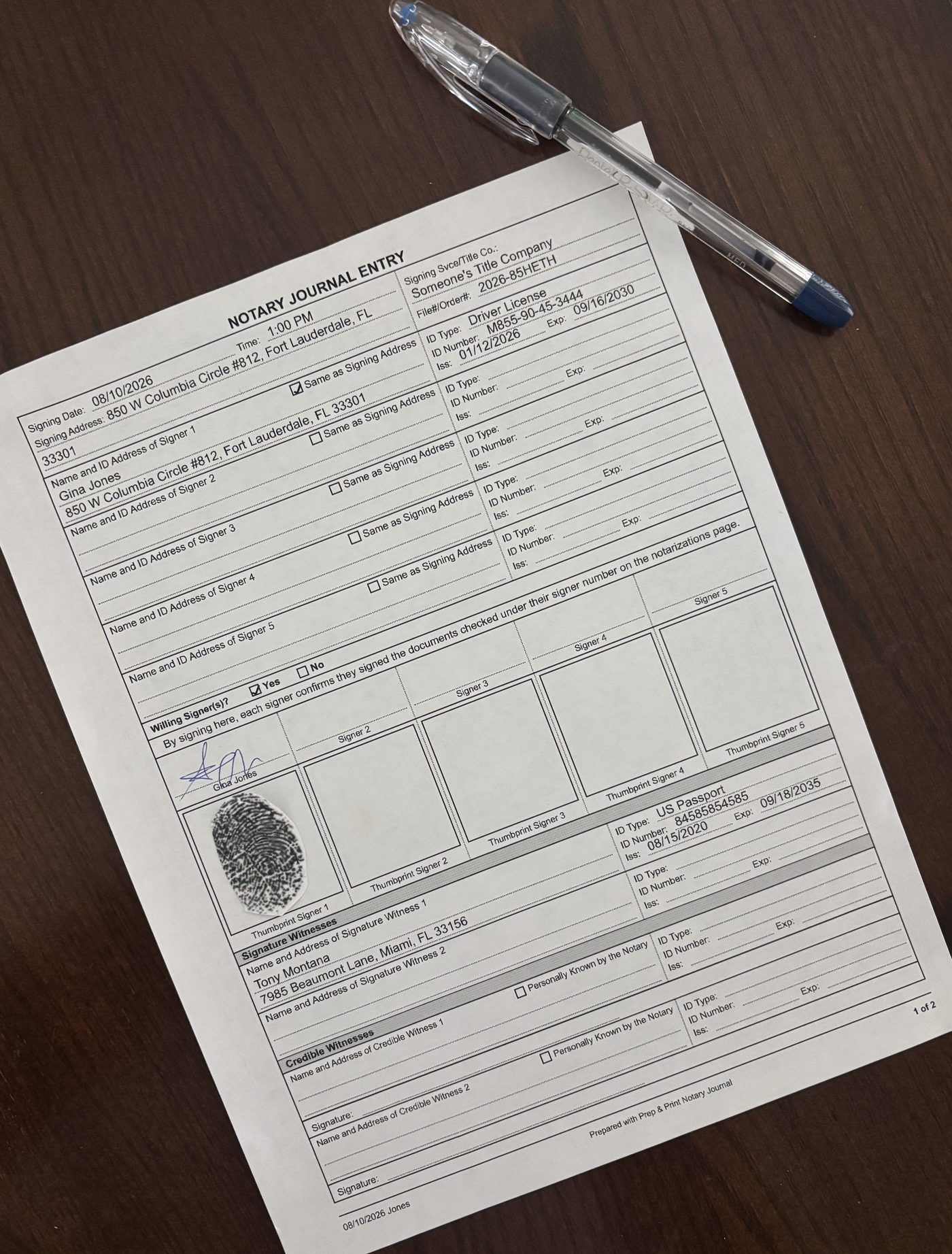
Prep & Print Notary Journal fills in the entry on screen before the signing, prints it for ink signatures at the table, and keeps the saved entry in your browser on your own computer. A written journal under the 2025 rule, without the handwriting. It costs $19 once, at prepandprintnotary.com.
Every state's rule is on one page: Notary Journal Requirements by State.
Sources: O.C.G.A. § 45-17-8 as amended effective January 1, 2025 (self-filer journal requirement), as published by the GSCCCA. General information, not legal advice.