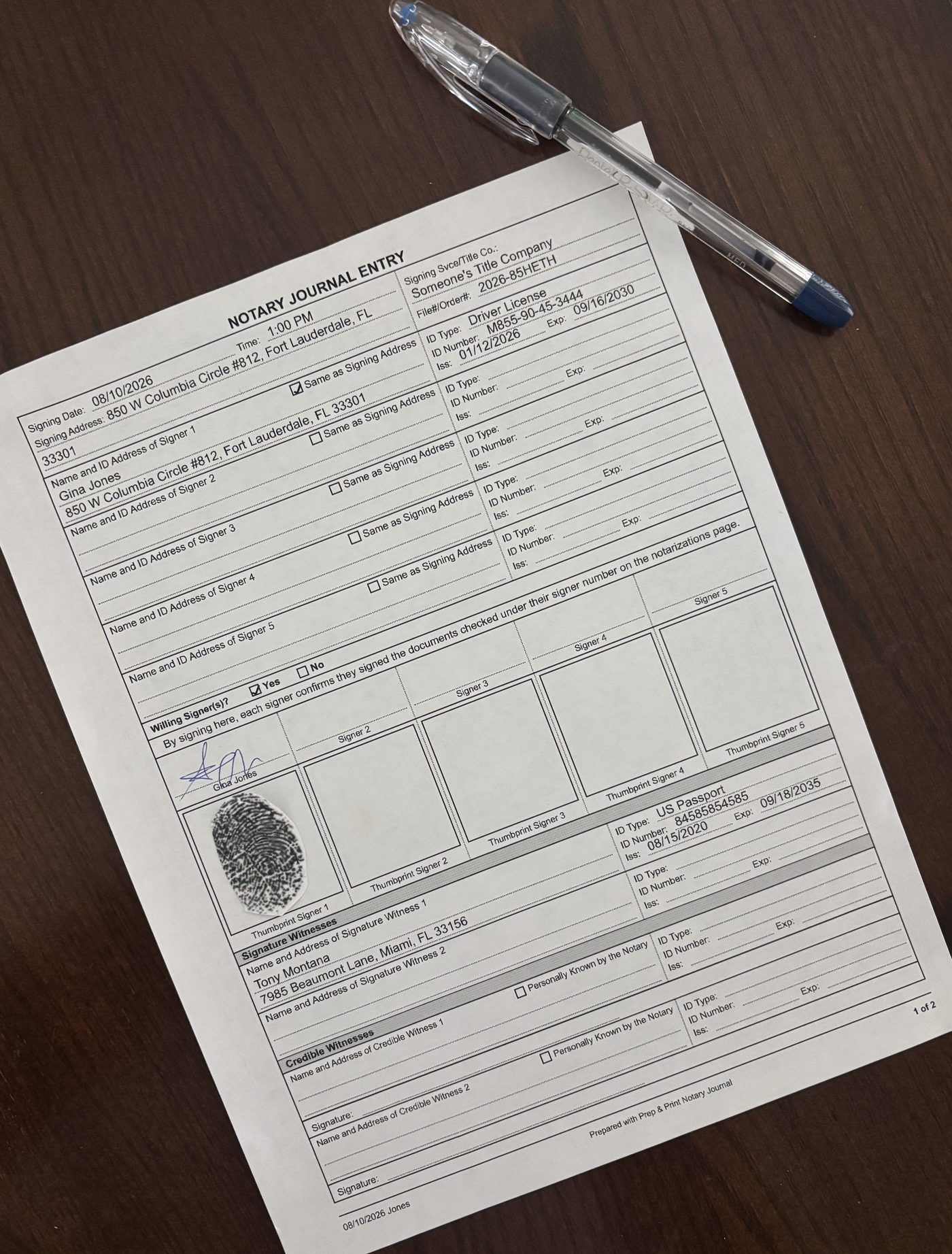
California Notary Journal Requirements — Bound, Sequential, and Strict (2026)
California has the strictest journal law in the country. A journal is required for every notarial act, it must be a single sequential bound book, and certain documents require the signer's thumbprint in it. Printed loose pages do not satisfy California's law. If you are commissioned in California, you need a bound journal, full stop.
The statute: California Government Code § 8206 opens with the core rule:
"A notary public shall keep one active sequential journal at a time, of
all official acts performed as a notary public."
One journal, sequential, covering everything. The Secretary of State's handbook reads this together with the statute's security rules: the journal must be kept "in a locked and secured area, under the direct and exclusive control of the notary," and a lost or stolen journal must be reported to the Secretary of State immediately.
Last updated: August 2026.
The thumbprint rule
Section 8206 requires a journal thumbprint for real-property documents and powers of attorney:
"If the document to be notarized is a deed, quitclaim deed, deed of
trust, or other document affecting real property, or a power of attorney
document, the notary public shall require the party signing the document
to place his or her right thumbprint in the journal."
If the right thumb is unavailable, the statute walks through the left thumb, then any finger, with a note in the journal each time.
What every California entry must include
Date, time, and type of each act; the character of the instrument; the signature of each signer; the identification relied on, with document numbers and dates; the fee charged; and for credible witnesses, their identification details as well.
What California notaries should buy
Buy a standard bound journal with numbered pages. Notary suppliers, office stores, and Amazon all carry them, and nothing else satisfies the statute.
One active journal at a time means the book in use holds every act until it fills. Choose one with numbered pages, room for the required entries, and space for the thumbprints the statute calls for.
Questions California notaries ask
Can I keep an electronic journal in California? Not for paper notarizations. Section 8206 requires the sequential bound journal. California's separate online notarization program, once fully in effect, has its own electronic journal rules for online acts only.
Can I keep two journals at once? No. "One active sequential journal at a time" is the rule. A second journal starts only when the first is full.
Can the public see my California journal? Not the whole journal. On a written request identifying the parties, the type of document, and the month and year of the act, the notary supplies a copy of that line item within 15 business days, or confirms no such entry exists (sections 8206 and 8206.5). The journal itself stays locked and under your exclusive control.
What happens to my journal when my commission ends? Deliver it to the county clerk's office where your oath is on file, within 30 days. Journals are official records, not personal property.
The honest note from us
Prep & Print Notary Journal sells a $19 app that prints filled-in journal pages, and printed pages do not comply with California's bound journal law. We would rather say that plainly than sell you the wrong thing. If you are commissioned in a state that leaves the journal format to you, the app is at prepandprintnotary.com. California notaries: buy the bound book.
Update, September 2026: we make a bound edition now. The Prep & Print bound journal is on Amazon — permanently bound, one signing per two-page spread, preprinted page and entry numbers, signature and thumbprint boxes, in five cover colors. California spells out what every entry must contain, so compare any journal you buy, ours included, against § 8206 before you rely on it.
Every state's rule is on one page: Notary Journal Requirements by State.
Statute: Cal. Gov. Code § 8206. General information, not legal advice. Verify against the current statute.