Does Alaska Require a Notary Journal? Only for Remote Notarizations (2026)
Only for remote notarizations. Alaska's journal statute applies to notarial acts performed for remotely located individuals; for ordinary in-person notarizations, no law requires a journal. The Lieutenant Governor's office, which runs Alaska's notary program, highly recommends keeping one for all notarial acts anyway.
The statute: Alaska Statutes 44.50.078 says a notary "shall maintain a journal in which the notary public chronicles all notarial acts that the notary public performs under AS 44.50.075," and AS 44.50.075 is the section on notarial acts for remotely located individuals. The journal for those acts is retained for ten years after the last act chronicled in it, and when a commission ends by resignation, revocation, or suspension, the notary keeps the journal and informs the lieutenant governor where it is located.
Last updated: August 2026.
What about in-person notarizations?
No journal statute applies to them. The Lieutenant Governor's office still recommends a journal for all in-person acts, and its notary supplies guidance describes what to look for when buying one: bound pages and sequentially numbered entries, features that protect a notary against accusations of tampering. That is advice about a good journal, not a format the law imposes.
The case for keeping one anyway
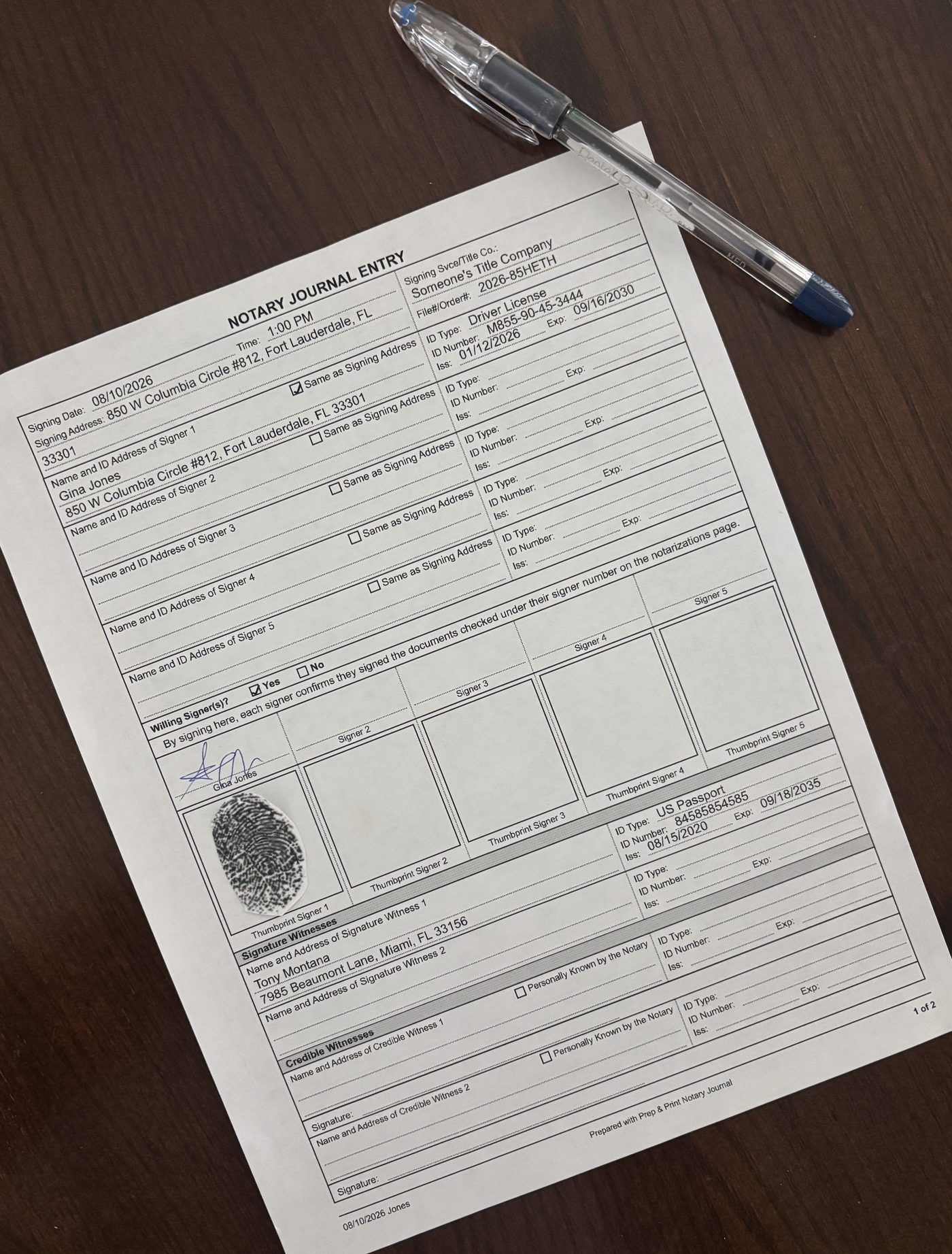
A journal answers the question that arrives years after a signing: did this person appear before you, and how did you know who they were? An entry with the date, the document, the ID checked, and the signer's own signature answers it with evidence rather than memory. The journal is your own record; Alaska sets no rules for who may see a voluntary record of in-person acts, and in a dispute it can be subpoenaed like any business record.
What format works in Alaska
For in-person acts, any consistent format is lawful: a bound book, printed pages kept in order, or an electronic record. The Lieutenant Governor's guidance points to bound, sequentially numbered journals as the tamper-resistant option, which is worth weighing for high-stakes work. Capture each act with the date, time, document, signer, identification, and fee, in the order the acts happen.
Questions Alaska notaries ask
Who oversees Alaska notaries? The Lieutenant Governor's office, which is unusual; most states run notaries through a Secretary of State. Its published guidance is the working reference on journals.
Do Alaska signing agents need a journal for loan signings? Not by statute for in-person signings. Real estate documents are also the ones most likely to be questioned later, which makes loan signings the acts most worth recording.
Does remote notarization change anything? Yes. A journal chronicling your remote notarizations is required by AS 44.50.078, kept for ten years after the last act in it. In-person work stays yours to document.
Should signers sign my Alaska journal? Nothing requires it for in-person acts. A signature in your record is direct evidence the person appeared before you.
The record without the handwriting
Prep & Print Notary Journal fills in the entry on screen before the signing, prints it for ink signatures at the table, and keeps the saved entry in your browser on your own computer. It costs $19 once, at prepandprintnotary.com.
Every state's rule is on one page: Notary Journal Requirements by State.
Sources: AS 44.50.078 (journal for remote notarial acts); Alaska Lieutenant Governor notary supplies guidance. General information, not legal advice.